
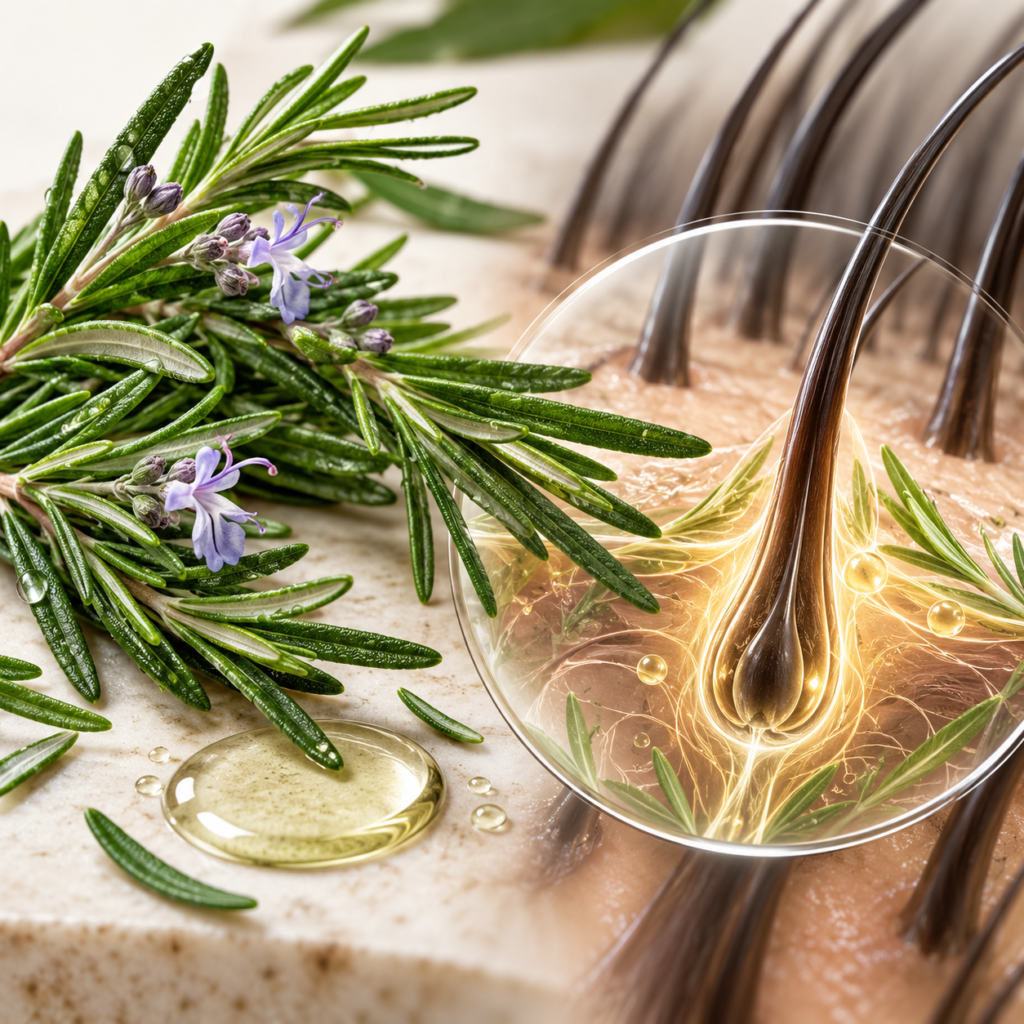
If you’ve scrolled through hair-care reels lately, you’ve probably seen the same claim again and again: “Rosemary oil for hair growth.” Bottles of rosemary-infused oil, DIY rinses, and “natural minoxidil” headlines are everywhere. But beyond the hype, what does science actually say—and how does a herb from the kitchen end up in a root-focused shampoo like Aranya’s Golden Root Elixir: Root Nourishment · Growth Support · Lustrous Shine?
Here’s a clear, non-exaggerated look at rosemary’s role in hair care, and why it makes sense as part of an Ayurvedic-inspired, multi-herb routine.
A Quick History: From Kitchen Herb to Hair Hero
Rosemary (Rosmarinus officinalis) has long been used in traditional medicine across Europe and the Mediterranean for:
- Supporting circulation and easing muscle aches
- Improving focus and memory (the “herb of remembrance”)
- Soothing minor skin and scalp irritations
Its use for hair is more recent in the global spotlight, but fits an old pattern: herbs that improve local circulation and calm inflammation often end up being repurposed for scalp and follicle support.
In Ayurvedic and modern herbal hair care, rosemary is valued not as a standalone miracle, but as a supportive herb for the scalp environment—which is exactly where hair growth begins.
What Research Suggests About Rosemary and Hair Growth
Most of the buzz around rosemary and hair comes from a few key studies and a growing body of lab research. It’s important to keep expectations realistic: rosemary is not a cure for baldness, but it does show interesting potential.
1) Rosemary vs. Minoxidil in Androgenetic Alopecia
One of the most cited studies compared rosemary oil to 2% minoxidil in people with androgenetic alopecia (common pattern hair thinning).
Key points (simplified):
- Participants used either rosemary oil or minoxidil on the scalp for 6 months.
- Both groups showed increased hair counts over time, with no statistically significant difference between the two in that study.
- The rosemary group reported less scalp itching as a side effect compared to minoxidil.
Important caveats:
- This was a small study with specific conditions; results can vary widely between individuals.
- The formulation, concentration, and carrier oil mattered; it wasn’t just “any rosemary product.”
- Rosemary is not approved as a drug for hair loss; this is supportive evidence, not a guarantee.
Still, the finding is significant: a common herb showed comparable results to a well-known treatment in a controlled setting, at least over 6 months.
2) Circulation and Scalp Stimulation
Rosemary has traditionally been used to stimulate circulation. In theory, better blood flow to the scalp can:
- Deliver more oxygen and nutrients to hair follicles
- Support a healthier environment for hair to grow
- Help clear metabolic waste that can accumulate around follicles
While direct human studies on scalp blood flow and hair growth are limited, the mechanism is plausible and aligns with why scalp massage and stimulating herbs are often recommended for thinning concerns.
3) Antioxidant and Anti-Inflammatory Actions
Oxidative stress and low-grade inflammation around follicles are increasingly recognized as contributors to hair thinning and shedding. Rosemary contains compounds like:
- Rosmarinic acid
- Carnosic acid
- Other polyphenols with antioxidant and anti-inflammatory properties
These may help:
- Neutralize free radicals that can damage follicle cells
- Calm mild scalp irritation that can worsen shedding
- Support a more balanced scalp microbiome and barrier function
In other words, rosemary doesn’t just “stimulate”; it also protects and soothes, which is valuable for anyone dealing with stress-related shedding or sensitive scalps.
How Rosemary Fits Into Golden Root Elixir
Golden Root Elixir isn’t a rosemary oil treatment; it’s a daily/regular-use shampoo that includes rosemary as part of a broader herb blend: amla, reetha, shikakai, curry leaves, fenugreek, and kalonji.
Here’s how rosemary contributes to the formula’s “growth support” promise:
1) Scalp Environment Support
- Rosemary’s traditional use for circulation and stimulation complements amla and curry leaves, which focus more on root strength and pigment support.
- Its antioxidant compounds help reduce oxidative stress on follicles, working alongside amla’s vitamin C and other herbal antioxidants.
- For people with mild scalp irritation or itch, rosemary’s soothing properties can make the scalp feel more comfortable, indirectly reducing scratch-related breakage.
2) Growth Support, Not a Standalone Cure
Golden Root Elixir positions rosemary as part of a multi-herb strategy, not a single-ingredient miracle:
- Amla + curry leaves: root nourishment, antioxidant support, traditional anti-greying care
- Reetha + shikakai: gentle cleansing and natural conditioning so the scalp stays balanced
- Fenugreek + kalonji: scalp comfort, protein-rich support, follicle-friendly environment
- Rosemary: circulation, antioxidant, and anti-inflammatory support for thinning-prone scalps
This approach acknowledges a key truth: hair shedding and thinning are multi-factorial. One herb alone rarely solves everything, but a well-designed blend can address several contributors at once.
Who Might Benefit Most From Rosemary-Infused Care?
Rosemary-containing routines like Golden Root Elixir may be especially helpful if you:
- Notice gradual thinning along the part, crown, or temples.
- Have stress-related shedding where the scalp also feels tight, itchy, or irritated.
- Prefer herbal, non-drug options as a first step before or alongside medical treatments.
- Want a daily-use product that supports roots without the mess of oils or DIY rinses.
If you’re already using prescribed treatments like minoxidil or finasteride, rosemary-based shampoos can be a supportive addition, but always discuss changes with your dermatologist, especially if you have a sensitive scalp.
How to Use Rosemary-Infused Shampoo Effectively
To get the most out of rosemary in a shampoo format:
- Frequency: Use Golden Root Elixir 2–4 times/week, depending on your scalp’s oiliness and sensitivity.
- Application:
- Wet hair thoroughly with lukewarm water.
- Massage the shampoo into the scalp, not just the lengths.
- Let the lather sit for 1–2 minutes so herbal actives can work before rinsing.
- Follow-up:
- Use a light conditioner on mid-lengths to ends.
- Avoid heavy oils or thick masks on the scalp right after washing if you’re prone to buildup.
- Consistency: Give it at least 8–12 weeks before judging results; hair cycles are slow, and root support shows up gradually.
You can enhance the effect with:
- Gentle scalp massage (with or without a light oil) a few times a week
- Reduced heat styling and tight hairstyles that pull at the roots
- Basic nutrition and stress care, which strongly influence shedding
Rosemary Oil vs. Rosemary in Shampoo: What’s the Difference?
Many viral routines focus on rosemary oil applied directly to the scalp. Golden Root Elixir uses rosemary as part of a wash-off shampoo formula. Both have pros and cons.
Rosemary Oil (Leave-In)
Pros:
- Longer contact time with the scalp
- Can be combined with carrier oils for massage and slip
Cons:
- Risk of irritation if used undiluted or at high concentrations
- Can cause buildup, especially on oily or acne-prone scalps
- Messy and time-consuming for daily use
Rosemary in Shampoo (Rinse-Off)
Pros:
- Easier to use consistently as part of your regular wash routine
- Less risk of heavy buildup or over-concentration
- Combines rosemary with other supportive herbs in one step
Cons:
- Shorter contact time than leave-in oils
- May feel less “intensive” for those expecting dramatic oil-treatment results
For most people, a rosemary-infused shampoo used consistently is more sustainable long-term than occasional, heavy oil treatments. You can always add a light rosemary-containing oil as an occasional pre-wash if your scalp tolerates it.
Realistic Expectations: What Rosemary Can and Can’t Do
Rosemary Can:
- Support a healthier scalp environment through circulation, antioxidant, and anti-inflammatory actions.
- Potentially help improve hair density in some types of thinning when used consistently over months.
- Soothe mild scalp irritation and itch, making your routine more comfortable.
- Complement other herbs and treatments aimed at root nourishment and growth support.
Rosemary Can’t:
- Reverse advanced baldness or regrow hair in areas where follicles are no longer active.
- Override strong genetic predisposition to pattern hair loss on its own.
- Replace medical evaluation for sudden, patchy, or severe hair loss.
Think of rosemary as a supporting actor, not the sole hero: valuable, evidence-backed, but most effective as part of a broader routine.
Make Rosemary Part of Your Root-Care Routine
You don’t need to brew rosemary teas, infuse oils for weeks, or massage your scalp daily with potent blends to benefit from this herb. Aranya’s Golden Root Elixir shampoo brings rosemary together with amla, curry leaves, fenugreek, kalonji, reetha, and shikakai so every wash supports:
- Root nourishment from amla and curry leaves
- Growth-friendly scalp conditions from rosemary, kalonji, and fenugreek
- Gentle cleansing and shine from reetha and shikakai
If you’ve been curious about the rosemary trend but want something simple, consistent, and grounded in both tradition and emerging science, Golden Root Elixir offers a practical way to let this popular herb work for your roots—without the hassle, mess, or overpromising.