
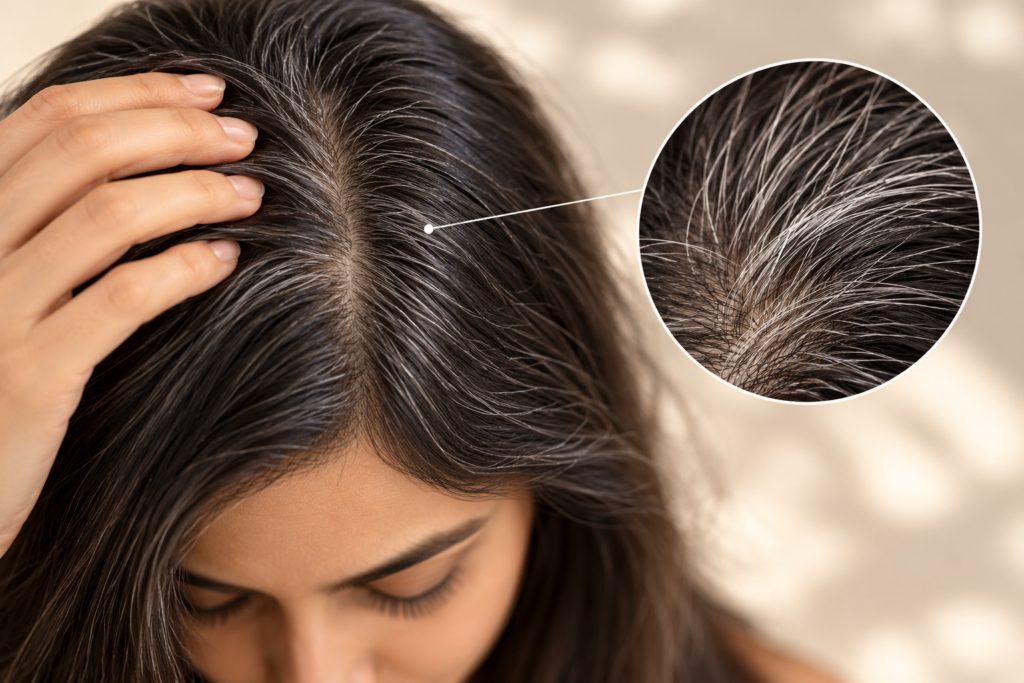
Finding grey hairs in your 20s or early 30s can feel like a rude surprise. You start scanning your parents’ and grandparents’ hairlines, wondering if it’s all genetics—or if something you’re doing (or not doing) is speeding things up. While genetics play a major role, Ayurveda and modern hair science agree on one thing: root health and oxidative stress matter.
Aranya’s Golden Root Elixir shampoo is built around herbs like amla and curry leaves that are traditionally used to support pigment, protect follicles, and keep roots strong. Here’s what’s realistic, what’s hype, and how you can use these herbs as part of a sensible routine.
Why Does Hair Turn Grey—And Why Prematurely?
Hair colour comes from melanin, produced by pigment cells (melanocytes) in the hair follicle. Over time, these cells naturally slow down, and hair grows in grey or white. But in premature greying, this process starts much earlier than expected for your age and ethnicity.
Key contributors include:
1) Genetics
If your parents or siblings went grey early, chances are higher you will too. Genetics set the baseline timeline for pigment production.
2) Oxidative Stress
Oxidative stress occurs when free radicals (from UV exposure, pollution, smoking, poor diet, chronic stress) overwhelm your body’s antioxidant defenses. In the hair follicle, this can:
- Damage melanocytes and reduce pigment production
- Accelerate the ageing of the follicle environment
- Contribute to weaker, more brittle strands over time
This is where antioxidant-rich herbs like amla become interesting: they don’t “reverse” grey, but they may help protect existing pigment cells from additional stress.
3) Nutrient Status
Deficiencies or imbalances in certain nutrients are associated with earlier greying in some people:
- Vitamin B12, folate, iron, copper, and overall protein intake
- Thyroid function and other hormonal factors
- Chronic illness or malabsorption issues
No shampoo can fix a serious deficiency, but a routine that supports scalp health and delivers antioxidants can be a helpful piece of the puzzle.
4) Lifestyle Factors
- Chronic stress and poor sleep
- Smoking and high alcohol intake
- Harsh chemical treatments and excessive heat styling
These don’t directly “create” grey hair overnight, but they can worsen oxidative stress and weaken the follicle environment, potentially making greying more noticeable.
Amla: The Antioxidant Powerhouse for Roots
If there’s one herb linked to premature greying in Ayurveda, it’s amla (Indian gooseberry). It shows up in classical texts, home remedies, and modern herbal shampoos for a reason.
What Amla Brings to the Table
- Very high in vitamin C and antioxidants, which help neutralize free radicals around the follicle
- Traditionally used to strengthen hair roots, support overall scalp vitality, and enhance shine
- Associated with delayed greying and better pigment retention in Ayurvedic practice.
In practical terms, amla doesn’t “re-colour” grey hair. Instead, it aims to:
- Protect existing pigment-producing cells from additional oxidative damage
- Support a healthier root environment so new growth emerges in better condition
- Improve overall hair quality (strength, shine), so greys look less dull and wiry
That’s why amla is a core ingredient in Golden Root Elixir: it’s less about “fixing” grey and more about slowing additional stress on the roots while improving the look and feel of all your hair.
Curry Leaves: The Traditional “Anti-Grey” Herb
In many Indian kitchens, curry leaves are tossed into tempering for flavor. In many Indian bathrooms, they’re simmered into oils and rinses for hair. Their reputation for greying is deeply rooted in home remedy culture.
How Curry Leaves Are Traditionally Used
- Boiled into oils or water for regular scalp massage and rinses
- Combined with amla, fenugreek, or hibiscus for “darkening” and strengthening blends
- Used over months and years as a long-term habit, not a quick fix
Reported benefits include:
- Strengthening hair roots and reducing excessive shedding
- Helping delay premature greying and support natural pigment over time
- Adding shine and softness to both pigmented and grey strands
Scientific evidence is more limited than for amla, but the traditional use is consistent: curry leaves are seen as a root tonicthat supports both hair quality and pigment health when used consistently.
In Golden Root Elixir, curry leaves complement amla by focusing on root resilience and long-term hair quality, especially for those noticing early greys along the part or temples.
Supporting Herbs: Fenugreek, Kalonji, Rosemary, Reetha, Shikakai
While amla and curry leaves take the lead on greying, the other herbs in Golden Root Elixir support the overall environment in which pigment cells function.
Fenugreek (Methi): Protein-Rich Soother
- Rich in proteins and mucilage that can help coat and reinforce the hair shaft.
- Traditionally used to soothe the scalp and reduce dryness that can make greys look more wiry.
- Helps improve manageability, so grey and pigmented hairs blend more smoothly.
Kalonji (Black Seed): Scalp Comfort
- Historically linked to scalp comfort and a balanced environment for hair growth.
- Often included in blends aimed at reducing excessive fall and supporting follicle health.
- Antioxidant properties may indirectly support pigment cells by reducing local stress.
Rosemary: Circulation and Antioxidant Support
- Traditionally used to stimulate the scalp and support circulation to follicles.
- Antioxidant and anti-inflammatory actions can help create a healthier scalp environment overall.
- While not specifically an “anti-grey” herb, a well-circulated, calm scalp supports better overall hair quality.
Reetha and Shikakai: Gentle Cleanse and Shine
- Reetha cleanses without over-stripping, keeping the scalp comfortable.
- Shikakai adds natural slip and smoothness, enhancing shine on both grey and pigmented hair.
- Together, they ensure the herbal actives can work on a clean, balanced scalp instead of one weighed down by buildup.
What These Herbs Can—and Can’t—Do for Grey Hair
It’s important to set realistic expectations.
They Can:
- Support root health with antioxidants and traditional tonics (amla, curry leaves).
- Improve overall hair quality: strength, shine, softness, reduced breakage.
- Potentially slow additional oxidative stress on pigment cells, which may help delay further premature greying in some people.
- Make existing greys look healthier and more lustrous, less dry and wiry.
They Can’t:
- Reverse fully grey hairs back to their original color once pigment cells have stopped working.
- Override strong genetic predisposition to early greying.
- Replace medical evaluation if greying is sudden, patchy, or accompanied by other symptoms (which could signal thyroid issues, deficiencies, or other conditions).
Think of Golden Root Elixir as a supportive, long-term routine, not a color-restoring treatment.
A Root-Focused Routine for Premature Greying Concerns
If early greys are bothering you, focus on a routine that protects roots, reduces stress, and improves overall hair quality.
1) Cleanse Gently With Golden Root Elixir
- Use 2–4 times/week, depending on your scalp’s oiliness.
- Massage into the scalp for 1–2 minutes before rinsing to let amla, curry leaves, and other herbs work.
- Follow with a light conditioner on mid-lengths to ends to keep strands soft and shiny.
2) Support With Scalp Massage
- 2–3 times/week, massage your scalp for 3–5 minutes with or without a light oil.
- This can help support circulation and reduce tension, which indirectly benefits follicle health.
- If using oil, choose something light and non-comedogenic; wash out thoroughly with Golden Root Elixir.
3) Protect From UV and Pollution
- Wear a scarf, hat, or use UV-protective hair products when in strong sun for long periods.
- Rinse hair after heavy pollution exposure or sweaty workouts to reduce buildup and oxidative stress.
4) Review Nutrition and Lifestyle
- Ensure adequate protein, iron, B12, folate, and copper through diet or supplements (after consulting a professional if needed).
- Prioritize sleep, stress management, and movement, which all influence oxidative balance.
- Avoid smoking and limit excessive alcohol, both linked to higher oxidative stress.
5) Be Patient and Consistent
- Hair grows slowly; changes at the root take months to show up visibly.
- Track progress with photos every 4–6 weeks under similar lighting.
- Focus on overall hair quality (shine, strength, reduced breakage) as much as new grey count.
When to See a Professional
Consider consulting a dermatologist or healthcare provider if you notice:
- Sudden, rapid greying over a few months
- Patchy grey or white areas with or without hair loss
- Greying accompanied by fatigue, weight changes, skin changes, or other symptoms
- A strong family history of thyroid issues, anemia, or autoimmune conditions
They may check for:
- Thyroid function
- Vitamin B12, folate, iron, and other nutrient levels
- Other underlying conditions that can contribute to premature greying
Herbal shampoos like Golden Root Elixir can support hair health, but they’re not a substitute for medical evaluation when something more significant is going on.
Make Peace With Your Greys—While Supporting Your Roots
Premature greying can feel like losing a part of your youth, but it’s also a reminder to pay attention to your overall health and how you treat your hair. You can’t change your genetics, but you can:
- Reduce oxidative stress where possible
- Nourish your scalp and roots with antioxidant-rich herbs
- Keep all your hair—grey and pigmented—strong, soft, and shiny
Aranya’s Golden Root Elixir shampoo brings together amla, curry leaves, fenugreek, kalonji, rosemary, reetha, and shikakai to:
- Protect roots with antioxidants (amla, rosemary, kalonji)
- Support traditional pigment care (amla, curry leaves)
- Improve overall hair quality so greys blend beautifully with the rest
Use it as part of a gentle, consistent routine, give it a few months, and focus less on “fixing” every grey and more on growing the healthiest, most lustrous hair you can—whatever its color.